Practical On-Device AI
Turning Edge AI into Real Features
Gabriel Volpi
About me
- • Google Dev Expert
- • Co-host @ Fragmented-AI
- • Platform Engineering @ SumUp

iurysouza.dev
About me
- • SDE Android
- • Order Experience @ iFood

@iFood
But why tho?
Do LLMs on mobile make any sense?
But why tho?
- • Aren't LLMs super hardware intensive?
- • We already have ChatGPT and Gemini in the cloud
- • SOTA models get all the attention
- • Benchmarks get crushed every week

Why run locally?
Even if they're getting good, why should you still bother?
- • Performance and latency
- • Privacy and security
- • Cost and accessibility
- • Offline functionality
System-wide LLM

One model, shared by every app
Gemini Nano on Android
ML Kit GenAI and the Prompt API
- • One model, shared by all apps
- • The platform manages model updates
- • Built-in safety features
- • Feature APIs are the easy way in. The Prompt API gives you more control
- • Supported devices only, checked at runtime
Using it in your app
ML Kit Prompt API
implementation("com.google.mlkit:genai-prompt:1.0.0-beta4")val generativeModel = Generation.getClient()val status = generativeModel.checkStatus()generativeModel.generateContentStream(prompt).collect { chunk -> print(chunk.candidates[0].text) }
With it you can
ML Kit Prompt API
- • Check if the device is supported, or the model still needs to download
- • Choose a model variant
- • Stream the response
- • Set temperature, topK and max output tokens
ML Kit GenAI APIs
The high-level route to Gemini Nano
- • High-level APIs for:
- •Summarization
- •Proofreading
- •Rewriting
- •Image description
Adding it to your app
ML Kit GenAI APIs
val articleToSummarize = "We are excited to announce a set of on-device..."val options = SummarizerOptions.builder(context).setInputType(InputType.ARTICLE).setOutputType(OutputType.ONE_BULLET).setLanguage(Language.ENGLISH).build()val summarizer = Summarization.getClient(options)
Self managed models
The DIY alternative
The DIY alternative
- • You're in control
- • Model management, setup, initialization and resource usage are yours
- • Run many different models
- • Bring your own fine-tuned model
- • Wider device compatibility
LiteRT-LM
Adding it to your app
What model do we use?
- • Export a Hugging Face model to a single .litertlm file with litert-torch
- • The file bundles the weights, the tokenizer and the prefill and decode graphs
- • Wait, what? 🤨
What's under the hood
What are these models?
- • Gemma 4, from Google
- • Open weights, Apache 2.0
- • E2B and E4B are the phone-sized ones
- • What are these models?
Prefill and decode
What's under the hood
- • Model weights and architecture
- • LiteRT
- • Prefill and decode operations
What are they doing?
What's under the hood
- • What do we do with that?
- • We're running inference
- • Making next token predictions
Running the model
Gemma3_1b_fine_tune.ipynb, simplified
def generate(self, prompt, max_decode_steps):token_ids = self._tokenizer.apply_chat_template([{"role": "user", "content": prompt}],tokenize=True, add_generation_prompt=True)# Prefill: the whole prompt in one pass fills the KV cachekv_cache = self._run_prefill(token_ids[:-1])# Decode: one token per step, reusing the KV cachenext_token, next_pos = token_ids[-1], len(token_ids) - 1for _ in range(max_decode_steps):outputs = self._decode_runner(tokens=[[next_token]], input_pos=[next_pos], **kv_cache)logits = outputs.pop("logits")[0][0]next_token = int(np.argmax(logits)) # greedy samplerif next_token == self._tokenizer.eos_token_id:breakprint(self._tokenizer.decode(next_token), end="")kv_cache = outputsnext_pos += 1
Where were we again?
What model do we use?
Adding it to your app
LiteRT-LM
implementation("com.google.ai.edge.litertlm:litertlm-android:0.17.1")
Push the model to the device
LiteRT-LM
# Push the model to the deviceMODEL_FILE="gemma-4-E2B-it.litertlm"TARGET_DIR="/storage/emulated/0/Android/data/com.myapp/files/"adb push "$MODEL_FILE" "$TARGET_DIR"
Create the engine
LiteRT-LM
val modelPath = File(context.getExternalFilesDir(null),modelName).absolutePathval engine = Engine(EngineConfig(modelPath = modelPath, backend = Backend.GPU()))engine.initialize() // slow: call it off the main thread
Start a conversation
LiteRT-LM
val conversation = engine.createConversation(ConversationConfig(samplerConfig = SamplerConfig(topK = 50,topP = 0.95,temperature = 0.8)))
Send the prompt
LiteRT-LM
conversation.sendMessageAsync(prompt).collect { message -> Log.d(message.toString()) }conversation.close()engine.close()
What to use?
It depends 😌
Size still matters
Caveats
- • Don't expect SOTA performance
- • Focus on a narrow use case
- • Start from a fine-tuned model
- • Handling resource usage is challenging
Shipping it at iFood
A real on-device AI feature in production
Meet iFood
A Brazilian food delivery app
- • Users order food and groceries through the app
- •200 M+ customers
- •120 M+ orders/month
- • After checkout, they follow the order in real time
- • That experience is what we call Waiting
The waiting screen
A high-attention moment after checkout.
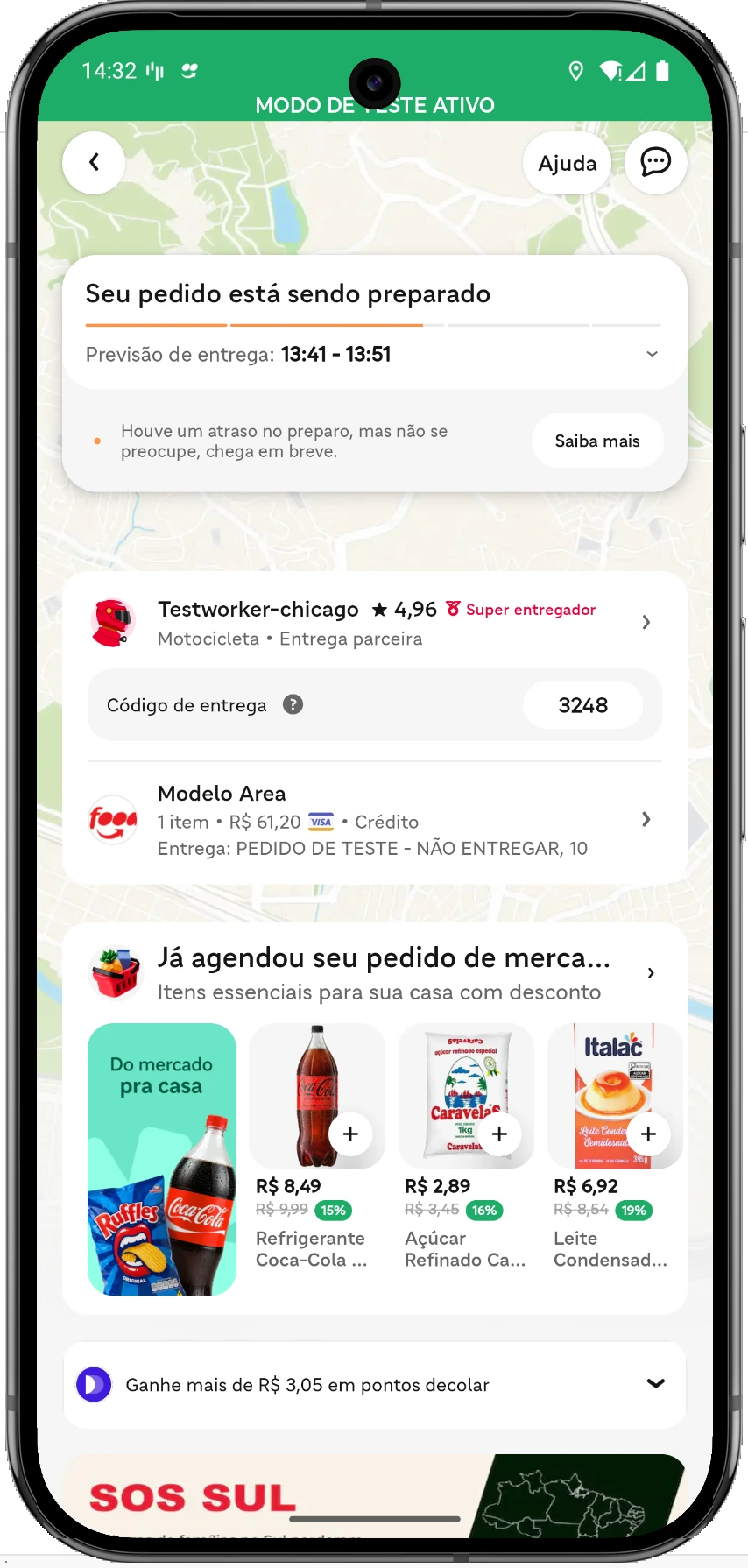
A simple user problem
What if the order is not for the user?
- • Someone else may be waiting for the order
- • They need status, ETA, address or pickup details
- • Today, that conversation usually happens on WhatsApp
Version 1
A floating AI button at the bottom of the waiting screen.
Why it didn't ship
The feature was competing with the product.
- • The bottom area already had an important product surface
- • The FAB introduced a new competing interaction
- • More clicks here could mean fewer clicks somewhere else
- • The safest decision was not to launch it
Version 02
One button with one job. A much quieter place in the product.

Generating on-device
The loading state is actual local inference not a request waiting for our backend.
Completing the job
Success isn't generating text. It's helping the user send it.
Small models need constraints
A technically valid answer can still be completely wrong for the product.
- • Greeted the restaurant instead of the recipient
- • Mixed delivery vocabulary with pickup orders
- • Returned internal status terminology
- • Made up details when the promo left room for interpretation
Make the model boring
We don't want creativity here. We want a faithful transformation of known facts.
Can we show the button?
The feature only exists when inference can run right now.
Coverage is a product metric
Before asking who clicked the feature, we need to know who could even see it.
- • Device support
- • Model availability
- • Background download state
- • Remote config audience
- • Waiting version eligibility
Measure before rollout
At iFood scale, even limited device coverage means thousands of opportunities every day.
- • ~2.3% coverage
- • 100K+ eligible orders/day
What happened in production?
Local inference worked. But it wasn't instant.
- • 8.71 s median generation time
What we learned
Most of the hard problems weren't model problems.
- • Start with one user job
- • Placement matters as much as capability
- • Hide is a valid fallback
- • Constrain small models aggressively
- • Measure coverage, not only inference
From demo to product
On-device AI is a product decision, not an SDK demo.
Press X to doubt
This is a fad.

L.A. Noire
It's a movie, not a picture
3 ideas
- • Race to the bottom
- • History
- • Specialization + ubiquity
- • Keep an eye on the trend lines
It's a movie, not a picture
Remember Mainframes?

Mainframe, 1970s-80s
It's a movie, not a picture
Remember Mainframes?

Terminal
It's a movie, not a picture
Remember Mainframes?

Early personal computer
Specialization and ubiquity
Mini models everywhere
- • Paper: Small Language Models are the Future of Agentic AI
- • “For many agentic workloads, SLMs are a superior default to LLMs due to cost, latency, controllability, and fine-tuning ease.”
- • Specialized small models, inside systems that also use bigger ones
Cheaper inference, new business models
Specialization and ubiquity
- • Free apps
- • Premium app tiers
- • Single payment apps
- • No variable cost per user interaction with LLMs
Small models everywhere
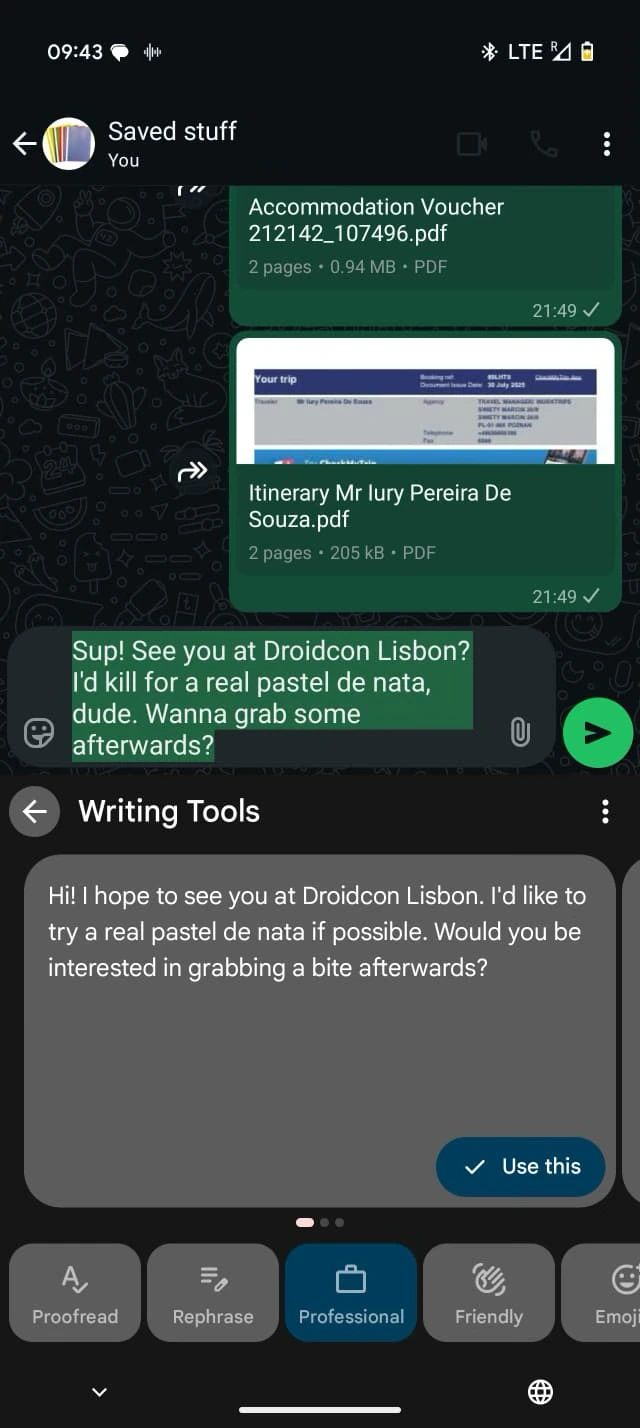
GBoard Writing Tools
Small models everywhere
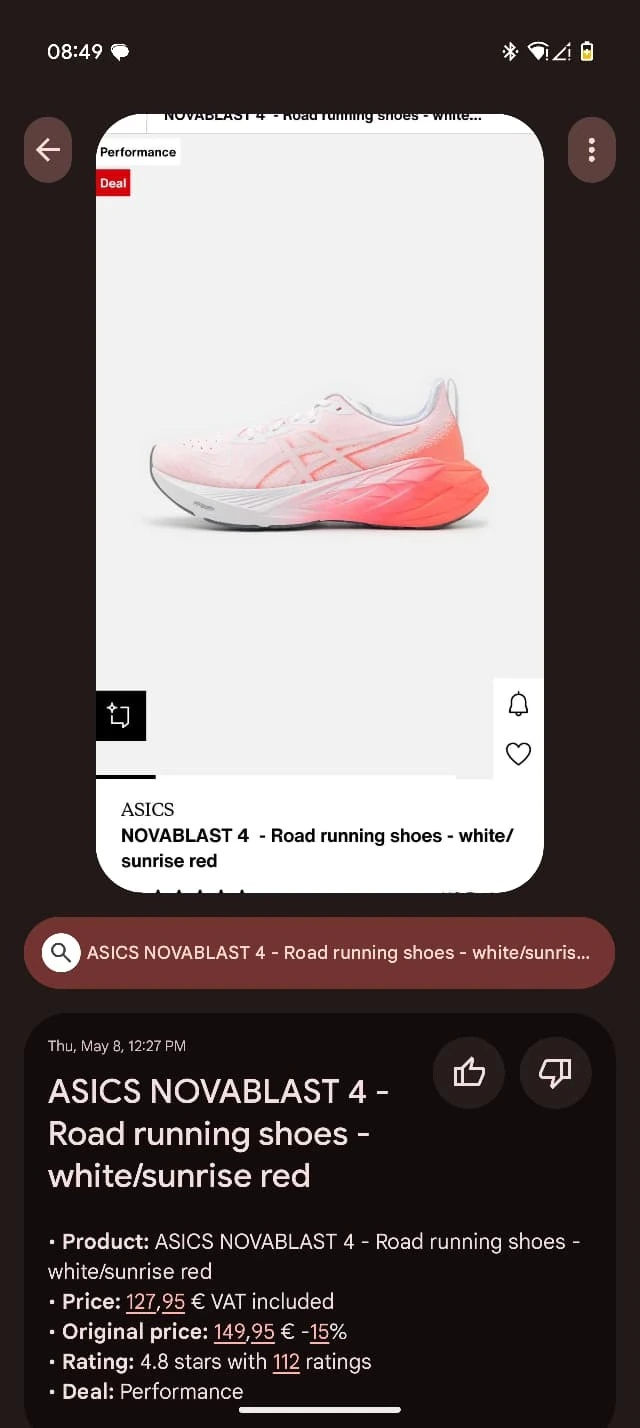
Pixel Screenshots
Give it a go
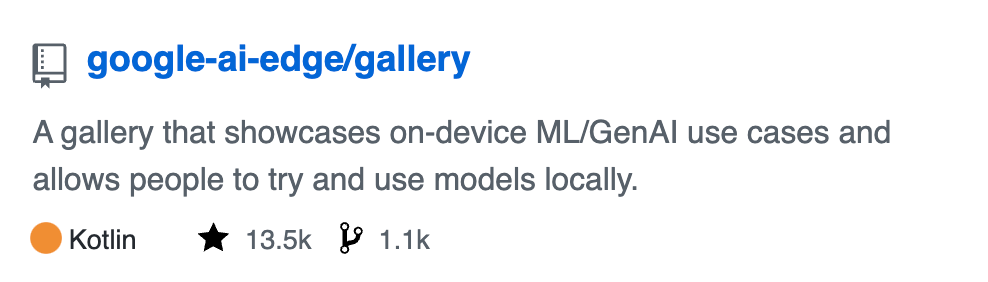
google-ai-edge/gallery
Give it a go
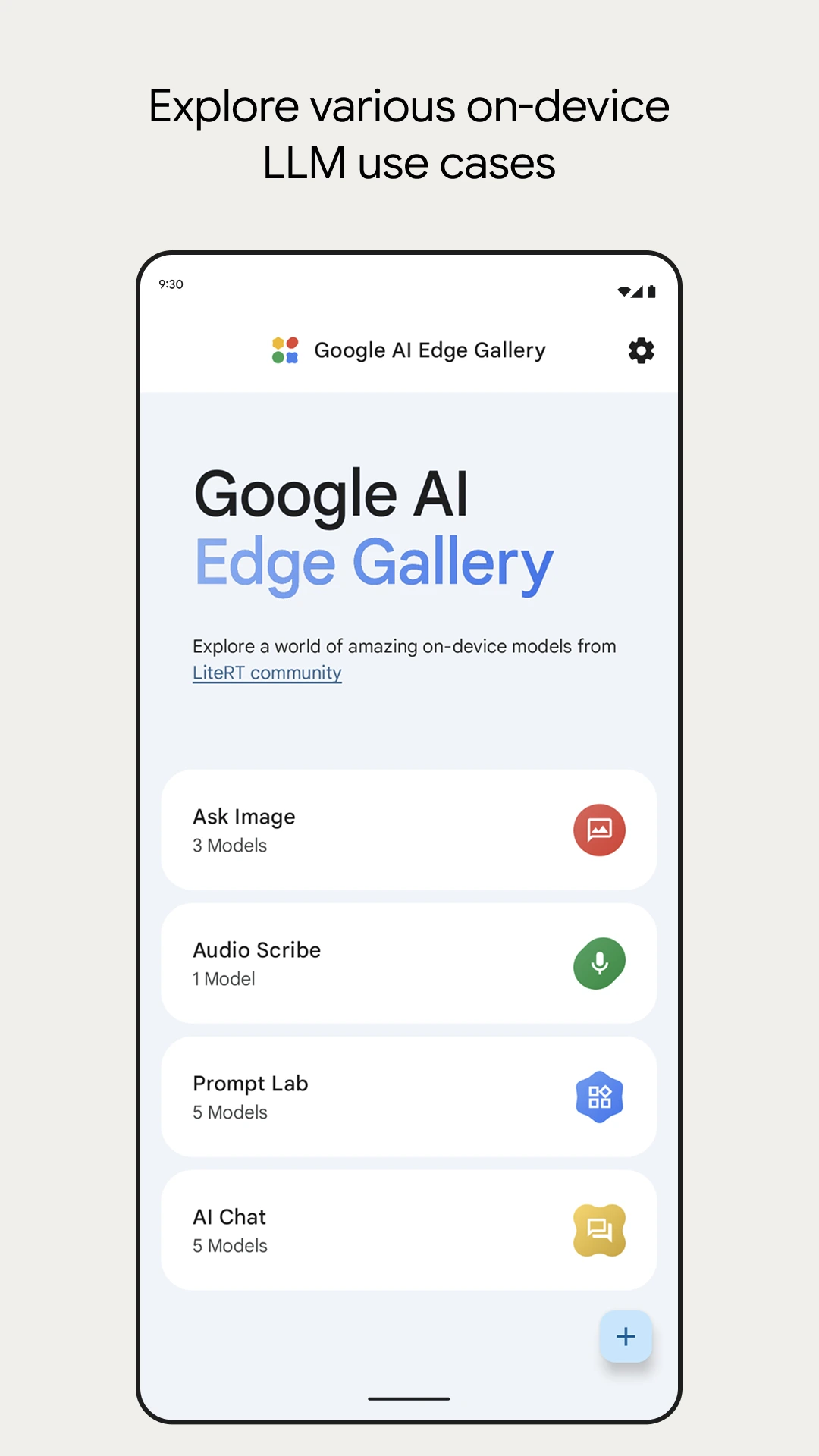
AI Edge Gallery
Give it a go
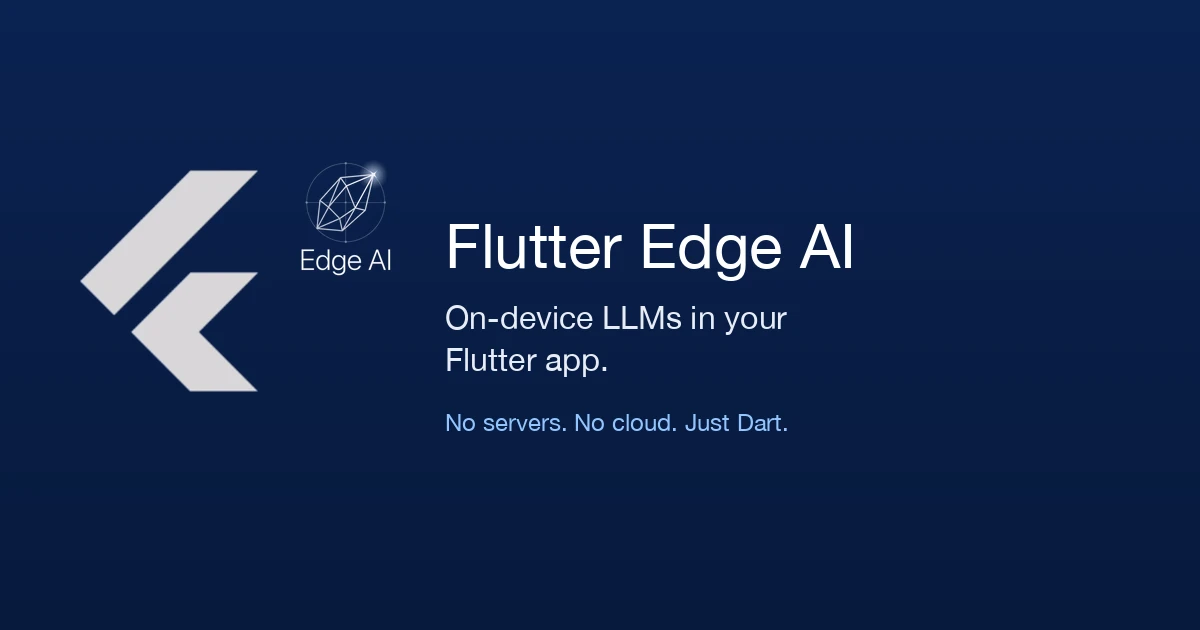
flutteredge.ai
Give it a go
Flutter Edge AI demo
References
Putting the genie in the bottle
- • ML Kit GenAI APIs
- • LiteRT-LM
- • Gemma 4
- • Paper: Small Language Models are the Future of Agentic AI
- • Deep Dive into LLMs like ChatGPT
- • Google AI Edge
Thank you!
iurysouza.dev
@iFood
Questions?
iurysouza.dev
@iFood